ENGINEERING METHOD
Steady-state and, where required, dynamic simulation; thermodynamic-method selection; assay characterization; column models; reaction or conversion basis; sensitivity and turndown cases.

Converts feed analysis and product targets into a converged process model, equipment duties, stream conditions and utility demand.
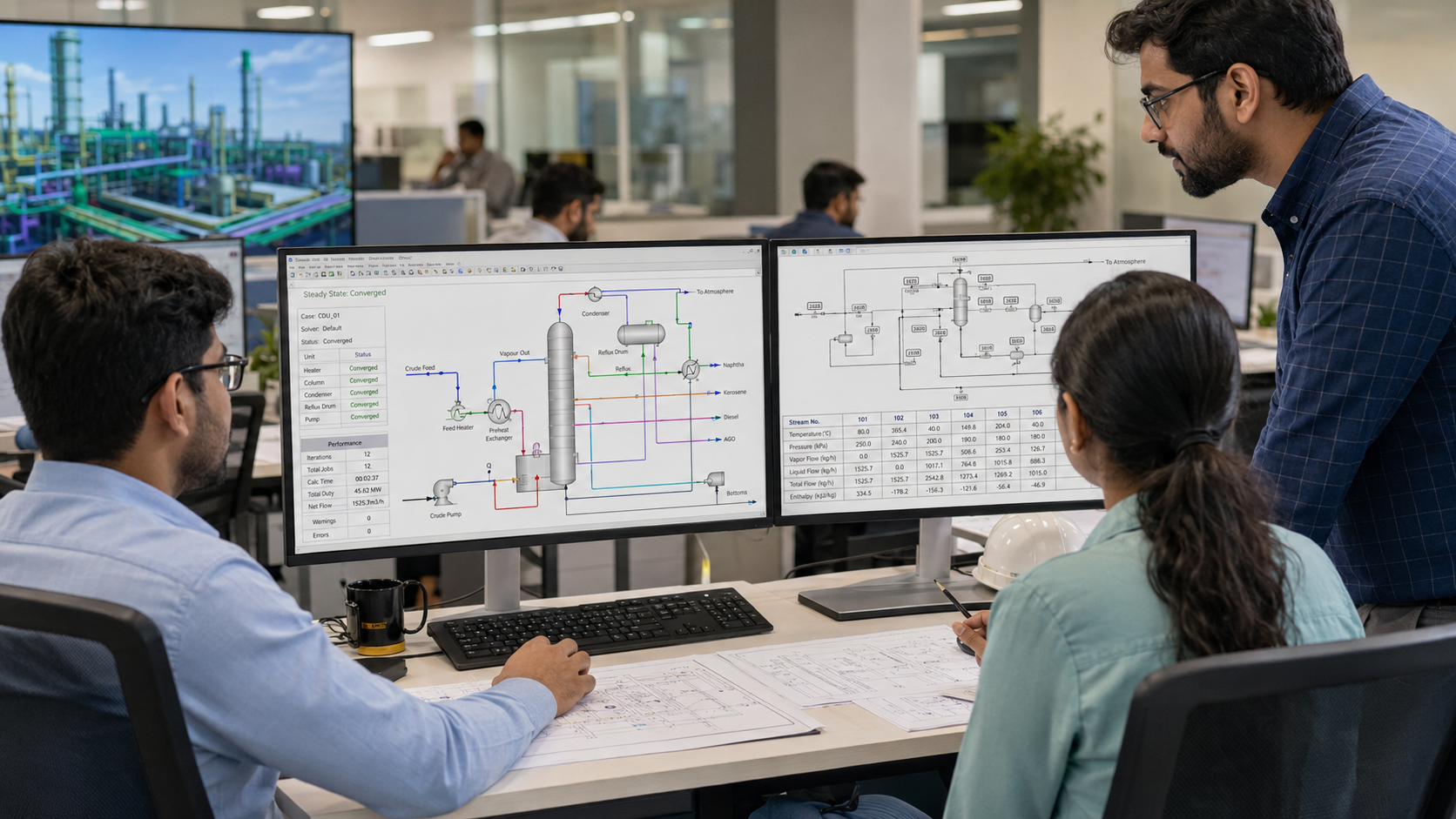
Steady-state and, where required, dynamic simulation; thermodynamic-method selection; assay characterization; column models; reaction or conversion basis; sensitivity and turndown cases.
Typical project-selected platforms may include Aspen HYSYS, Aspen Plus, CHEMCAD or PRO/II-class process simulators; specialist calculations and validated spreadsheets support defined duties.
Representative feed assay/composition, operating targets, product specifications, pressure profile, utilities and recycles.
Simulation basis, stream table, heat and material balance, utility balance, equipment duty list, PFD inputs, sensitivity cases and model archive.
Property-method review, closure checks, independent balance verification, comparison with laboratory/licensor/vendor data and controlled model revision.
CDU/VDU, fractionation, hydrotreating interfaces, solvent recovery, alcohol distillation, utility and revamp/debottleneck studies.
Software is selected per project scope, client requirement, interoperability and licensed availability; naming a tool class does not imply that every project uses every product.
Software is selected per project scope, client requirement, interoperability and licensed availability; naming a tool class does not imply that every project uses every product.